
Woodstock Georgia Red Clay: How It Affects Your Concrete
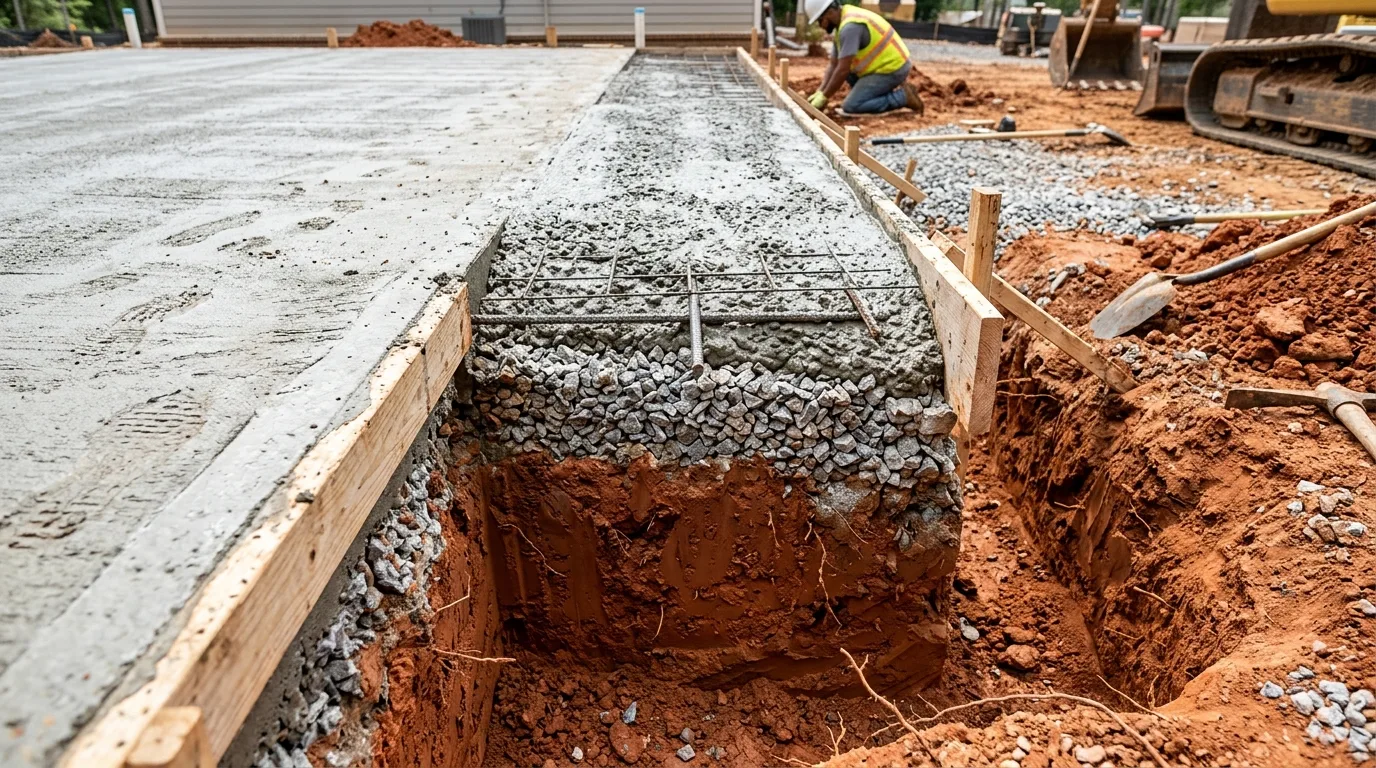
Have you ever noticed how quickly a freshly graded yard in Woodstock turns into sticky, orange mud after rain — and then cracks into hard plates during a dry stretch? That same soil behavior happens beneath every concrete slab, driveway, and foundation in Cherokee County, whether you can see it or not. Georgia’s red clay is the single most important factor determining whether concrete in Woodstock lasts 10 years or 40. In this post, we cover what the clay actually does beneath a slab, what proper preparation looks like, and how to tell if a concrete contractor understands the local soil conditions.
Get Expert Concrete Advice for Cherokee County's Soil
Free estimates with sub-grade assessment. Call Woodstock Concrete Pros at (888) 376-0955.
Why Georgia’s Red Clay Matters for Concrete in Woodstock
Cherokee County’s soil is classified as Ultisol — the highly weathered, iron oxide-rich red clay that defines the Piedmont geological region stretching across north Georgia. This soil has two properties that make it unusually difficult for concrete installations: it is expansive and it has low permeability.
Expansive means the clay absorbs water and swells — by 10–30% in volume — then shrinks as moisture leaves. In Cherokee County’s climate, this cycle happens continuously: the region receives 54 inches of annual precipitation, concentrated in spring and summer, followed by drier fall and winter periods. Every moisture cycle is a movement cycle beneath your slab. A concrete driveway or patio sitting directly on this clay experiences upward pressure when soil swells and void formation when soil shrinks. The result is cracking, settlement, and ultimately structural failure of the slab.
Low permeability means the clay doesn’t drain well — water sits on it and migrates laterally rather than filtering down. This keeps the sub-grade saturated for longer after rain events, extending the swelling cycle and making drainage design critical for any concrete installation.
Types / Options: What Preparation Looks Like for Cherokee County Clay
Standard residential preparation (minimum): Excavate to 8–10 inches below finished grade. Install 4–6 inches of compacted crushed gravel (aggregate base) over the native clay. Place 6-mil poly vapor barrier. Install reinforcement (wire mesh or rebar). Pour concrete at minimum 4-inch thickness for driveways, 3.5–4 inches for patios. Cut control joints every 8–12 feet to manage cracking locations.
Upgraded preparation for problematic soils: Some areas of Woodstock — particularly in older subdivisions near Downtown Woodstock and in low-lying areas near drainage swales — have particularly unstable clay or fill material. These sites benefit from deeper gravel base (6–8 inches), geotextile fabric between clay and gravel to prevent migration, and rebar rather than wire mesh reinforcement.
Foundation preparation: Residential foundations in Cherokee County are typically supported on spread footings or piers that extend below the seasonal moisture fluctuation zone — typically 18–24 inches deep. The concrete foundation wall itself is not directly exposed to the expansive clay cycle, but the drainage around it is critical: improperly graded sites that allow water to accumulate against the foundation wall create lateral pressure that can crack poured foundation walls over time. Retaining walls over 4 feet in Cherokee County require permits specifically because the lateral forces from saturated clay require engineered design.
Practical Uses: Where You’ll See Red Clay Effects in Woodstock
- Driveways in Towne Lake and Bradshaw Farm: These golf communities are built on Piedmont clay. Driveways installed in the 1990s without adequate base preparation commonly show the classic mid-slab crack pattern that indicates sub-base movement.
- Patios near drainage features: Backyard patios installed near downspout discharge areas or property low points frequently show edge cracking and settlement because water concentrates beneath the slab edge.
- Shed and outbuilding pads: Small pads installed without any sub-base — concrete poured directly on native clay — almost always crack within a few years in Cherokee County’s climate.
- Foundation-adjacent concrete: Driveways and sidewalks that run parallel to a foundation wall can crack when the expansive clay between the slab and foundation creates differential movement.
- Concrete repair calls: The majority of concrete repair work in Woodstock traces back to inadequate base preparation at installation. Mudjacking — pumping grout beneath a settled slab — addresses the void left when clay shrinks; it doesn’t address the cause.
How to Tell if a Contractor Understands Cherokee County’s Soil
A contractor who understands Woodstock’s red clay will mention the sub-base unprompted — it’s the first thing experienced local crews think about when they visit a site. They will specify base depth in their written estimate, not just “concrete thickness.” They will ask about drainage on your property and look at which direction the lot slopes.
A contractor who doesn’t mention soil preparation, who offers significantly lower per-foot prices than competitors, or who proposes pouring concrete on compacted native clay without a gravel base is the most expensive contractor you can hire — because you’ll pay again when the slab fails. The concrete is the visible part of the project; the base preparation is what determines whether it lasts.
Woodstock Concrete Built for Cherokee County's Soil
We specify every sub-base component in writing. Get a free estimate from Woodstock Concrete Pros at (888) 376-0955.
Cost Factors: What Proper Preparation Adds
Proper sub-base preparation for Cherokee County’s red clay adds approximately $1–$2 per square foot to a concrete installation compared to pouring on native clay without preparation. For a 600-square-foot driveway, that’s $600–$1,200 in added base preparation cost. This is the cost that separates a 10-year driveway from a 35-year driveway.
The aggregate material itself — crushed gravel — is the primary cost. Labor for compaction adds to the total. Sites with significant grade changes that require more excavation cost more than level sites. If existing soil is particularly soft or unstable, a geotextile fabric layer adds $0.25–$0.50 per square foot.
Foundation repair in Woodstock, when it becomes necessary due to expansive clay effects, typically ranges from $3,500 to $10,000+ depending on the repair method — piering, slabjacking, or carbon fiber wall reinforcement for bowing walls. None of these repair costs would be necessary on a properly prepared site with adequate drainage. Investing in proper base preparation from the start is the most cost-effective approach.
Frequently Asked Questions
Does red clay cause concrete cracks in Woodstock?
Yes — Cherokee County’s expansive Ultisol clay is the most common cause of premature concrete cracking and settlement in Woodstock. The clay swells when wet and shrinks during dry periods, creating movement beneath slabs. Concrete without a compacted gravel base is most vulnerable. Slabs with adequate base preparation, proper reinforcement, and control joints can accommodate normal clay movement without cracking.
How do concrete contractors handle red clay in Cherokee County?
Experienced contractors excavate to below the active moisture zone, install a compacted crushed gravel base of 4–6 inches minimum, place a poly vapor barrier, and reinforce the slab with wire mesh or rebar. Control joints are cut every 8–12 feet to create predictable relief points. Drainage grading ensures water moves away from the slab rather than pooling beneath it.
Do I need foundation repair if I have red clay soil in Woodstock?
Not necessarily — the majority of homes on Cherokee County’s red clay soil remain structurally sound for decades when drainage is properly managed. Foundation issues arise when drainage fails (water consistently accumulates against the foundation), when significant soil erosion has occurred, or when the structure was built without adequate drainage provisions. Annual inspection of your foundation drainage, gutters, and grading will identify issues before they require major repair.
Build Your Woodstock Concrete Right the First Time
Proper base prep, drainage design, and reinforcement for Cherokee County's clay. Call (888) 376-0955 for a free estimate.
Related: