
Foundation Repair in Woodstock GA: Why Red Clay Matters
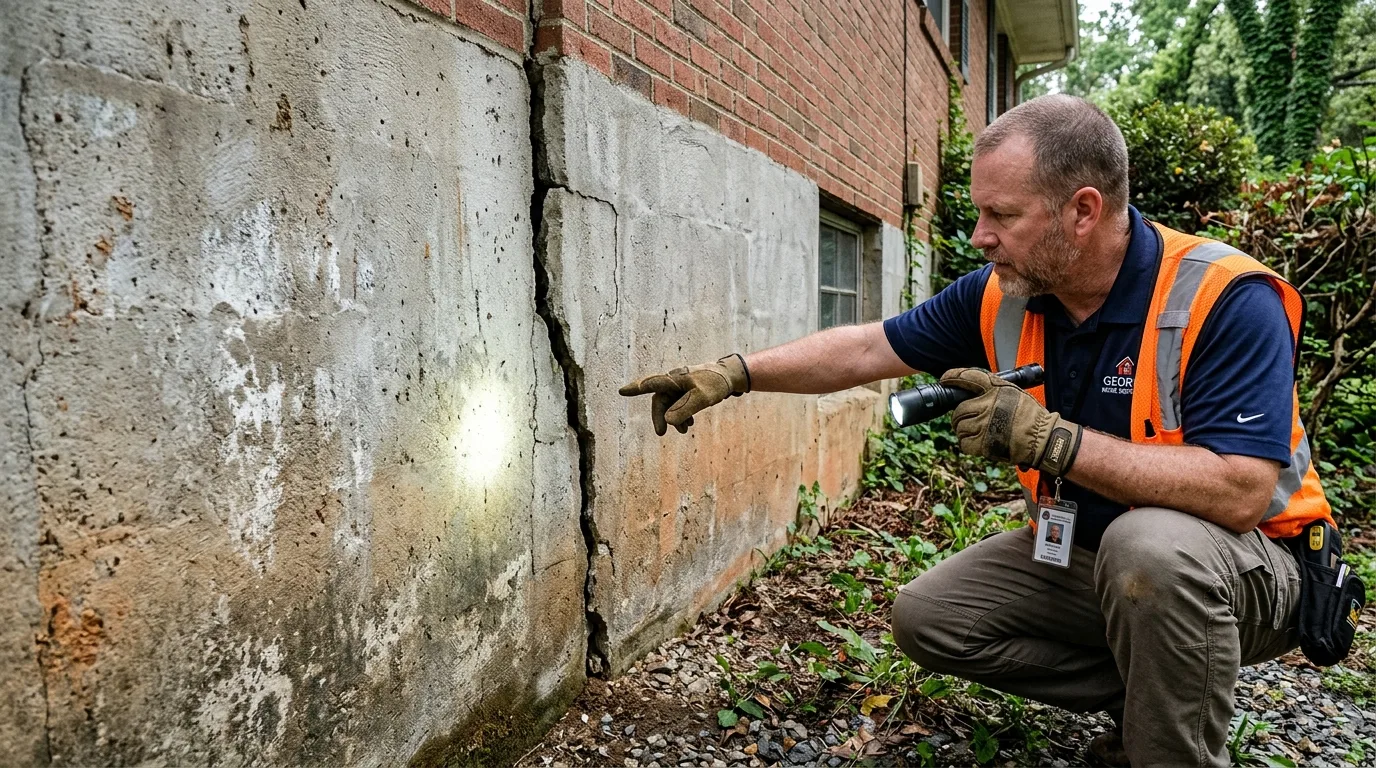
A stable foundation is something Woodstock homeowners take for granted until the warning signs appear — doors that stick for the first time, a crack at the corner of a window frame, or a visible step in the exterior brick veneer. In Cherokee County, these symptoms often trace back to the region’s expansive Ultisol red clay, which creates foundation movement dynamics that differ significantly from the sandy soils of coastal Georgia or the stable bedrock of the mountains. This post helps Woodstock homeowners understand what’s causing foundation issues, which repair methods are appropriate, and when a concrete contractor versus a foundation specialist is the right call.
Woodstock Concrete Repair — Free Assessment for Slabs and Foundation Approaches
We address concrete issues that affect foundation performance. Call (888) 376-0955.
Why Cherokee County Red Clay Creates Foundation Risk
The Piedmont Ultisol clay that characterizes Cherokee County has properties that make it uniquely challenging for residential foundations: it expands significantly when wet and contracts when dry, and it has low natural drainage capacity that keeps it wet for extended periods after rain events.
In Woodstock’s typical year, spring rains saturate the soil around foundations, causing lateral pressure on foundation walls as the clay swells. As summer progresses and rainfall decreases, the clay dries and shrinks — creating voids beneath foundation bearing surfaces in areas where drainage hasn’t directed water consistently away from the structure. The annual cycle of expansion and contraction produces cumulative stress that, over 10–20 years, can cause measurable foundation movement in homes without adequate drainage design.
The homes most vulnerable to foundation movement in Woodstock are those with downspouts discharging against the foundation, flat or negative grades that direct surface water toward the house, and landscaping that retains moisture against foundation walls. These are all correctable drainage problems — and addressing them is always the first step in any foundation repair program, before any structural repair is undertaken.
Types / Options: Foundation Repair Methods for Cherokee County Homes
Drainage correction (first, always): Before any structural foundation repair, the drainage conditions that caused or accelerated the problem must be addressed. This means: extending downspouts 6+ feet from the foundation, regrading soil to slope away from the house at 6 inches over 10 feet, removing moisture-retaining mulch against the foundation, and repairing gutters. Drainage correction alone resolves many early-stage foundation movement cases in Woodstock.
Concrete underpinning (push piers or helical piers): For foundations that have settled more than structural drainage correction can reverse, steel piers are driven into the soil below the active clay zone — typically 15–25 feet deep — to transfer foundation load to stable bearing strata below the seasonal moisture fluctuation. Cost in Cherokee County: $1,500–$3,500 per pier; most residential projects require 8–15 piers depending on the extent of settlement. This is the most common structural repair for settled foundations in Woodstock.
Slabjacking/mudjacking: For slab-on-grade foundations where the slab itself has settled due to voids in the clay sub-grade, mudjacking pumps a grout mixture beneath the slab to lift it back to level. Cost: $300–$700 per section for residential slabs. This addresses the void — not the drainage condition that caused the void. Must be combined with drainage correction to be a lasting repair.
Carbon fiber wall reinforcement: For foundation walls showing bowing inward from lateral clay pressure, carbon fiber straps bonded to the wall face provide tensile reinforcement that prevents further bowing without excavating the exterior. Cost: $2,000–$5,000 per reinforced section. Appropriate for early to mid-stage bowing (under 2 inches of deflection).
Basement or crawl space waterproofing: Interior drain tile systems, sump pumps, and vapor barriers address moisture that reaches the interior foundation components. These systems manage water that has already reached the foundation rather than preventing it from reaching it — they’re a supplement to exterior drainage correction, not a replacement.
Practical Uses: Foundation Repair Scenarios in Woodstock
- Settled slab-on-grade in a Deer Run home: New cracks appearing at doorframe corners, doors binding in summer. Root cause: clay sub-grade dried and contracted beneath the slab during Woodstock’s summer drought, creating voids. Solution: mudjacking to fill voids, drainage correction to reduce future void formation.
- Bowing basement wall in an older Wyngate home: Interior wall showing 1/2–1 inch of inward bow at mid-height. Root cause: decades of wet-clay lateral pressure without drainage management. Solution: carbon fiber straps plus exterior grade correction.
- Foundation settlement in Downtown Woodstock infill: A 1950s home near downtown with original construction lacking adequate drainage provisions. Root cause: chronic moisture accumulation from inadequate gutters and flat grade. Solution: drainage correction first; pier underpinning for sections that have settled more than 1 inch.
- Concrete foundation crack in a Bradshaw Farm home: A vertical or stair-step crack in the poured concrete foundation wall at the corner. Root cause: differential settlement from uneven moisture conditions on opposite sides of the foundation. Solution: crack injection to seal the crack plus drainage correction; monitor for additional movement.
- Concrete garage floor settling away from foundation wall: Gap developing between slab and foundation wall in garage. Root cause: garage slab moving independently of the foundation — common where the slab lacks adequate base preparation. Solution: mudjacking to lift the slab to the foundation level; fill the gap with flexible joint sealant.
When Concrete Repair Overlaps With Foundation Repair
Not all foundation-related symptoms require a foundation specialist. Settled concrete slabs that have moved away from foundation walls — a visible gap at the garage slab-to-wall joint, for example — are concrete repair issues, not structural foundation issues. Mudjacking and slab replacement for detached garages and outbuildings are concrete contractor work, not foundation engineering.
When a structure’s slab-on-grade foundation has settled uniformly — the whole slab has dropped, not just a corner — that is also concrete contractor territory in most cases. When a foundation wall is bowing, cracking significantly in a stair-step pattern, or when door and window frames are racking (out of square), a structural assessment by a foundation engineer is warranted before any repair is attempted.
Woodstock Concrete Issues Connected to Foundation Movement — We Assess
Free assessment for slab repair, mudjacking, and concrete issues near your foundation. Call (888) 376-0955.
Cost Factors: Foundation Repair in Cherokee County
Drainage correction alone: $500–$3,000 depending on scope. Carbon fiber wall reinforcement: $2,000–$5,000 per section. Pier underpinning: $1,500–$3,500 per pier, $12,000–$52,000 for 8–15 pier installation. Mudjacking for settled slabs near foundation: $300–$700 per section. Foundation crack injection: $500–$1,500 per crack depending on length and accessibility.
The most cost-effective approach in Woodstock is always drainage correction first. Homeowners who invest in piers before addressing drainage often find that the drainage problem continues to create new settlement issues in untreated areas. A qualified foundation assessment by an engineer familiar with Cherokee County’s clay conditions should precede any structural repair investment.
Frequently Asked Questions
What causes foundation problems in Woodstock GA?
The primary cause of foundation movement in Woodstock is Cherokee County’s expansive Ultisol clay. This clay swells when wet, creating lateral pressure on foundation walls, and contracts when dry, creating voids beneath slab-on-grade foundations. Poor drainage — downspouts discharging against the foundation, negative grades directing water toward the house — accelerates the process. Addressing drainage is the most important preventive measure available to Woodstock homeowners.
How much does foundation repair cost in Woodstock GA?
Foundation repair costs in Woodstock vary widely by repair type: drainage correction alone runs $500–$3,000; pier underpinning runs $12,000–$52,000 for typical residential projects; carbon fiber reinforcement runs $2,000–$5,000 per section; mudjacking runs $300–$700 per section. Get a structural engineering assessment before committing to major structural repairs — the assessment typically costs $300–$600 and can identify whether drainage correction alone may be sufficient.
Is foundation repair in Woodstock covered by homeowners insurance?
Standard homeowners insurance policies generally do not cover foundation movement caused by soil expansion or contraction — which is the most common cause in Cherokee County. Coverage may apply if the movement was caused by a sudden, accidental event covered under the policy (like a plumbing leak that saturated the soil). Read your policy carefully and consult your insurer if you’re unsure what is covered before beginning repair work.
Woodstock Concrete and Foundation-Adjacent Repair — Free Assessment
We handle concrete issues that affect your foundation's performance. Call (888) 376-0955.
Related: