
Woodstock Concrete Driveway Maintenance: Surviving Georgia's Seasons
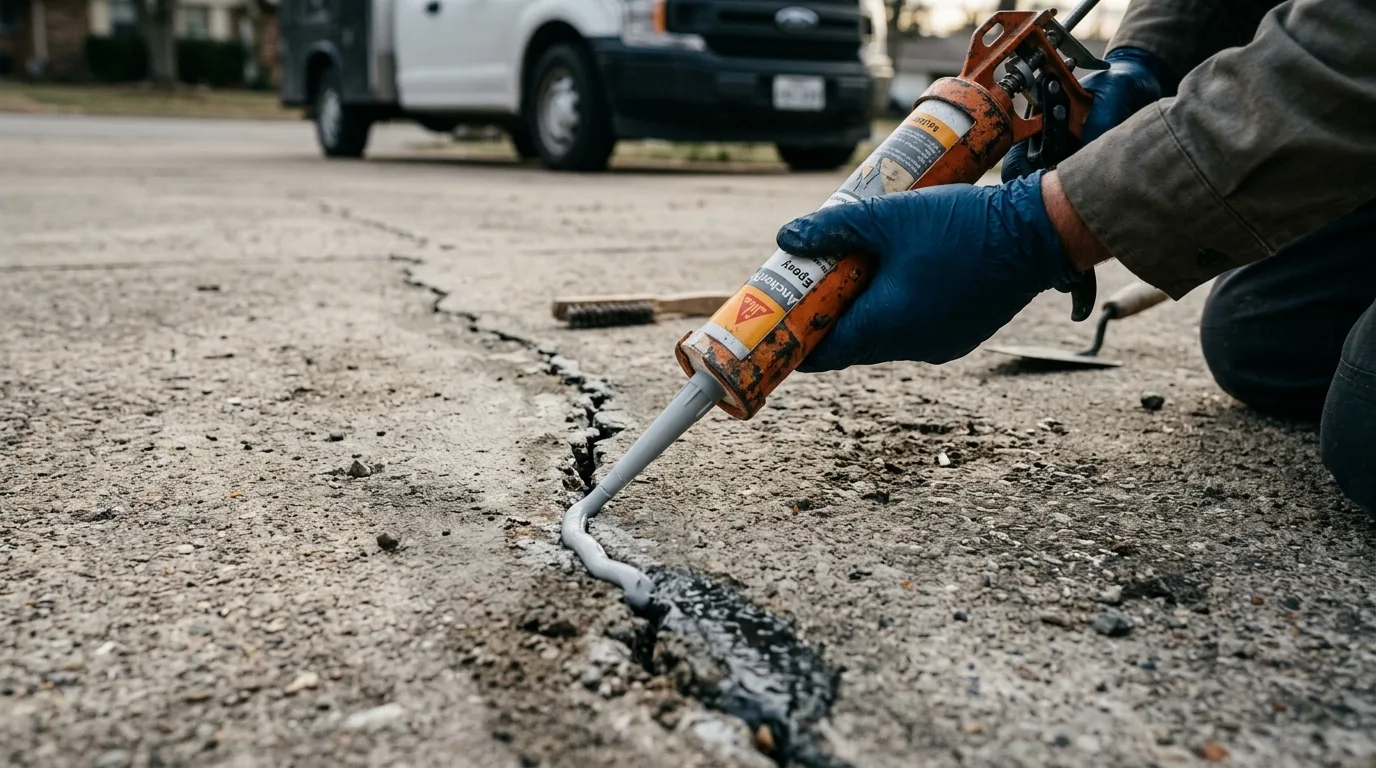
Georgia concrete driveways that last 40 years and Georgia driveways that need replacement in 15 years usually look the same for the first five. The difference shows up at year seven or eight — one driveway has tight control joints, intact surface texture, and no edge cracking; the other has widening cracks, edge settlement from clay movement, and a surface that’s absorbing water. The divergence almost always traces back to one variable: sealing. Concrete driveway maintenance in Georgia is fundamentally a sealing program with seasonal awareness, and this guide covers exactly what that looks like for Woodstock homeowners.
Concrete Driveway Maintenance Questions? Ask Us.
Free repair assessments and maintenance advice for Woodstock homeowners. Call (888) 376-0955.
Why Georgia’s Climate Makes Driveway Maintenance More Critical Than Average
Woodstock sits in a humid subtropical climate zone with four genuine seasons — and each season creates a different stress on concrete. Understanding the annual cycle helps you time maintenance correctly.
Spring (March–May): Rain arrives in volume — Cherokee County averages 54 inches annually, with spring carrying a large share. Water infiltrating unsealed control joints can begin to undermine the aggregate base over time. This is the season to inspect joints and fill any that have opened since the previous year.
Summer (June–August): Temperatures above 87°F combined with intense UV degrade concrete sealers faster than any other season. By the end of a Georgia summer, a sealer applied two years ago has significantly less protection than it had when applied. This is also when clay sub-grade beneath slabs experiences its first major drying cycle — void formation beneath unsupported slab edges begins.
Fall (September–October): The ideal maintenance window. Temperatures in the 55–75°F range are optimal for sealer application. The surface has survived summer UV stress and is now entering the period before winter freeze-thaw cycles begin. Applying sealer in fall protects the surface through winter and gives the sealer the best possible adhesion conditions.
Winter (November–February): Woodstock’s winters include nights below 32°F — enough for water that has infiltrated unsealed concrete surface to freeze, expand, and cause surface spalling over time. A properly sealed driveway resists this process. A sealed driveway that has a few unsealed crack entry points can still experience freeze-thaw damage at those specific locations.
Types / Options: Concrete Driveway Sealers for Georgia
Penetrating sealers (silane/siloxane): Water-repelling compounds that penetrate the concrete pore structure rather than forming a surface film. Excellent for driveways exposed to vehicle traffic because there’s no film to peel or scratch. Effective for 5–7 years in Woodstock’s climate. No color change — the driveway looks natural. Best for functional driveways where appearance is secondary.
Acrylic film-forming sealers: Form a thin protective film on the surface. Available in matte, satin, or gloss finish and in tinted versions. Enhance concrete color slightly. Effective for 2–4 years in Georgia’s UV — shorter than penetrating sealers but easier to apply DIY. Good for driveways where some visual enhancement is desired.
Epoxy/polyurethane sealers: Harder, longer-lasting film-forming options used primarily for garage floors and covered concrete surfaces. Not recommended for exterior driveways in Woodstock because UV breaks them down faster than protected surfaces warrant, and they can peel under the temperature cycling of Georgia’s seasons.
Concrete repair filler for joints: Not a sealer but equally important. Control joint filler (flexible polyurethane backer rod and sealant) prevents water entry into the joint itself, which is the primary path for moisture to reach the clay sub-grade. Joint filler should be inspected annually and replaced when cracked or pulling away from the joint walls.
Practical Uses: Seasonal Maintenance Calendar for Woodstock
- Spring inspection: Walk the driveway after winter. Look for new cracks, any joint filler that has pulled loose, and any sections that have settled. Photograph any cracks to track growth. Clean the surface with a concrete cleaner if the winter has left staining.
- Summer monitoring: Don’t apply sealer in summer — temperatures above 90°F shorten sealer working time and reduce penetration. Monitor for new surface pitting on older driveways that indicates surface carbonation. Consider a shaded morning inspection after July Fourth weekend for any heat-related surface stress.
- Fall sealing (most important maintenance event): Apply penetrating sealer in September or October. Surface should be clean, dry, and above 50°F. Allow 24 hours without rain forecast. This single maintenance event extends driveway life more than any other action.
- Winter crack monitoring: Check after any significant freeze event for new surface spalling, especially around older control joints. Small spall repairs done in spring are far cheaper than large section replacement later.
- Annual joint inspection: Inspect all control joints and any expansion joints at garage or house connections every spring. Refill or replace any joint sealant that has cracked, dried out, or pulled away.
How Red Clay Affects Long-Term Maintenance Needs
Cherokee County’s expansive clay sub-grade creates a maintenance need that doesn’t exist in regions with stable sandy soils: slab monitoring for differential settlement. Even a properly prepared concrete driveway in Woodstock will experience minor sub-grade movement over decades as the clay responds to seasonal moisture cycles. This is normal and manageable if caught early.
The maintenance response is mudjacking — pumping a grout mixture beneath settled sections to lift them back to level. A settled section that’s caught when it’s dropped 1/2 inch costs $300–$500 to mudjack and reseal. The same section that’s ignored until it drops 2 inches and develops a full-depth crack costs $1,500–$3,000 to replace. Annual inspection is the cheapest form of concrete maintenance.
Woodstock Concrete Maintenance — Repairs Before They Grow
Free repair assessments for cracked, settled, or deteriorating driveways. Call Woodstock Concrete Pros at (888) 376-0955.
Cost Factors: Maintenance vs. Repair vs. Replacement
Annual maintenance cost for a Woodstock concrete driveway: $150–$400 for a professional sealer application every 3–5 years, plus $50–$150 for joint filler replacement when needed. Total annual average: $50–$100 per year.
Repair cost when maintenance is skipped for 7–10 years: crack filling $200–$500; mudjacking a settled section $300–$700; surface resurfacing $3–$6 per sq ft for a full driveway. Total: $1,500–$4,000 for a driveway that needed only regular sealing.
Replacement cost when repair is delayed too long: $5–$8 per square foot for a new concrete driveway in Woodstock. A 600 sq ft driveway: $3,000–$5,000. The math strongly favors maintenance.
Frequently Asked Questions
How often should I seal a concrete driveway in Georgia?
Concrete driveways in Georgia should be sealed every 3–5 years with a penetrating silane/siloxane sealer. Georgia’s intense UV exposure and Cherokee County’s 54-inch annual rainfall degrade sealers faster than national averages suggest. Apply in fall (September–October) when temperatures are in the 50–75°F range for best adhesion. Higher-traffic driveways may benefit from more frequent sealing — every 3 years rather than 5.
What causes concrete driveways to crack in Woodstock GA?
The primary causes of concrete driveway cracking in Woodstock are: inadequate sub-base preparation (no compacted gravel base beneath the slab on Cherokee County’s expansive clay), missing or improperly spaced control joints, water infiltration through unsealed joints that undermines the base over time, and freeze-thaw cycles that affect water trapped in unsealed surface pores. Tree root intrusion is a secondary cause in older neighborhoods with mature oaks near the driveway.
Can I seal my own concrete driveway in Woodstock?
Yes — penetrating sealers and acrylic film sealers are available at hardware stores and are DIY-friendly for homeowners comfortable with basic application. The key requirements are a clean, dry surface above 50°F, no rain for 24 hours after application, and proper coverage rate. Professional application ensures even coverage and the right product for your driveway’s condition. Professional resealing runs $150–$400 for a standard driveway and is worth it if the driveway has any cracks or surface damage that should be addressed before sealing.
Protect Your Woodstock Driveway Before Small Problems Grow
Free inspection and repair assessment. Call Woodstock Concrete Pros at (888) 376-0955.
Related: