
Woodstock Concrete Pouring: Best Time of Year in Cherokee County
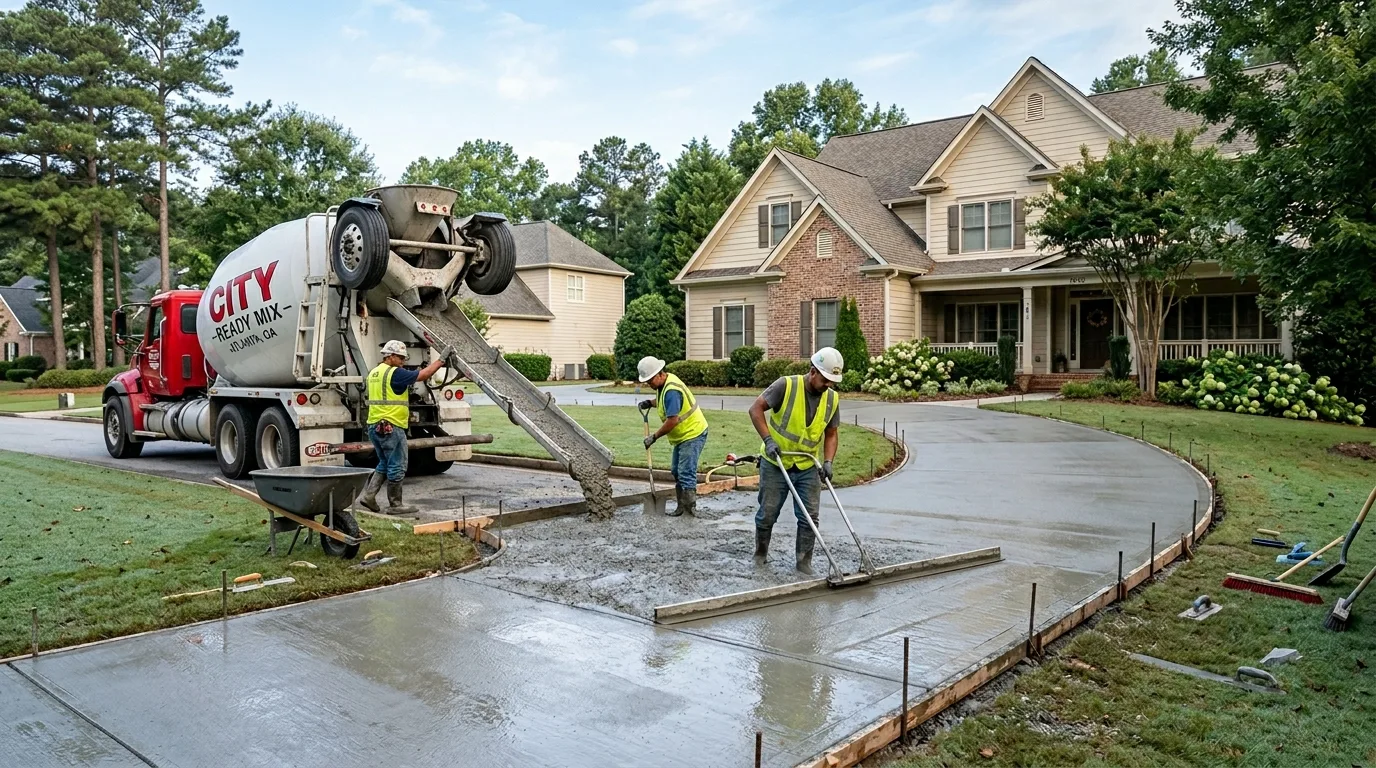
Cherokee County averages 54 inches of rain annually, sees summer highs above 89°F, and records winter lows in the low 30s — a climate range that has meaningful consequences for concrete work. The best time to pour concrete in Cherokee County is not simply “when it’s not raining” — it’s when temperature, humidity, and forecasted conditions combine to let fresh concrete cure at the rate it needs to develop full strength. In this post, we cover the ideal seasonal windows in Woodstock, what happens to concrete when conditions fall outside the optimal range, and how experienced contractors adapt when the calendar doesn’t cooperate.
Ready to Schedule Your Woodstock Concrete Project?
We plan pours around Cherokee County's seasonal windows. Call (888) 376-0955 for availability.
Why Pour Timing Matters for Cherokee County Concrete
Concrete gains strength through a chemical process called hydration — cement reacts with water to form calcium silicate hydrate crystals that bind the aggregate together. This reaction is temperature-dependent: too cold and it slows to a near-halt; too hot and it races ahead, drying the surface before the interior cures evenly. The result of either extreme is a concrete slab that appears solid but has lower compressive strength and increased cracking risk compared to concrete cured in the 50–70°F sweet spot.
In Woodstock’s humid subtropical climate, the humidity factor adds another layer. High relative humidity — common in July and August when daily humidity in Cherokee County regularly exceeds 70% — reduces evaporation from the concrete surface. That sounds helpful, but in combination with high temperatures, it creates conditions where the surface skin forms at a different rate than the interior, increasing the risk of plastic shrinkage cracking in flatwork like driveways and patios. Experienced local contractors adjust mix design, timing, and curing practices to manage these risks — contractors who don’t understand Georgia’s specific conditions skip these steps.
Types / Options: Concrete Pours by Season in Woodstock
Spring (April–May): IDEAL. Temperatures between 50°F and 75°F with moderate humidity. Concrete cures at an optimal, even rate. Rain risk is present but predictable with a 7-day forecast. Spring is the most popular booking window in Woodstock — concrete contractors fill their schedules 2–4 weeks out during April and May. Schedule early.
Summer (June–August): CHALLENGING. Average highs reach 87°F in Woodstock, with high humidity reducing surface evaporation control. Contractors working in summer use early-morning scheduling (6–8 AM pours), evaporation retardant applied to the fresh surface, and accelerated sealing to lock in moisture. Stamped concrete is more difficult in summer because the narrower working window — concrete sets faster in heat — compresses the time available for pattern application.
Fall (September–October): IDEAL. Often the best window of the year for decorative and stamped concrete work. Temperatures return to the 55–75°F range, humidity drops, and the combination gives crews maximum working time. Fall also avoids the spring backlog — contractors are more available and schedules are more flexible.
Winter (November–March): MARGINAL. Woodstock’s winter lows drop to 30°F in January and February, and concrete poured when ambient temperatures approach or fall below 40°F is at risk. Frost within 24 hours of a pour can freeze the bleed water at the surface, causing surface scaling. Winter pours are possible with precautions — heated mix water, insulating blankets, monitoring of overnight forecasts — but require more management and are not recommended for decorative or stamped concrete.
Practical Uses: Seasonal Timing in Real Projects
- New concrete driveway in Woodstock: Target April–May or September–October to ensure the slab cures properly and achieves the design strength needed to bear vehicle loads without cracking.
- Stamped concrete patio: Fall is the best window — the longer working time allows crews to align patterns carefully and apply color release agents without rushing. Avoid summer heat for decorative work.
- Concrete slab for garage or outbuilding: Slabs are more forgiving than driveways for seasonal timing because they don’t carry vehicle traffic during cure, but spring and fall still provide the best outcomes.
- Concrete repair and resurfacing: Resurfacing overlays bond best when temperatures are 50–80°F and rain is not forecasted for 24 hours. The October–April window covers most repair work in Woodstock.
- Emergency repairs: Crack filling can be done year-round as long as temperatures are above 40°F and the crack is dry. Don’t let a crack wait until spring if it’s growing — the freeze-thaw cycle will widen it through winter.
- Retaining walls: Poured concrete retaining walls benefit from fall scheduling, which gives the structure the longest possible curing window before spring rain loads.
How Cherokee County’s Climate Affects Concrete Curing
The humidity subtropical climate of Woodstock creates a specific curing challenge: summer rain. A concrete pour needs to be complete and initially set before rain arrives — rain falling on fresh concrete before initial set can wash out the cement paste, roughen the surface texture, and dilute the water-cement ratio at the slab top. Cherokee County’s summer pop-up thunderstorms are notoriously difficult to predict beyond 48–72 hours, which is why experienced contractors monitor radar closely and are prepared to cover fresh pours with poly sheets on short notice.
Fall and spring offer more stable, predictable weather patterns. Frontal systems that bring multi-day rain can be tracked 5–7 days out, giving contractors a reliable window. Woodstock’s I-575 corridor and surrounding Cherokee County communities share the same weather exposure — the thermal mass of the Atlanta metro to the south moderates temperature extremes slightly compared to more rural north Georgia, but the humidity remains consistent.
Plan Your Woodstock Concrete Project Around the Right Window
Woodstock Concrete Pros schedules pours in Cherokee County's optimal seasonal windows. Call (888) 376-0955.
Cost Factors: Does Timing Affect Price?
Spring and fall peak demand in Woodstock can affect contractor availability and, to a lesser extent, pricing. Contractors with full spring schedules occasionally price new inquiries at a slight premium; contractors with slower winter books sometimes offer modest discounts on labor. Material costs — concrete mix, rebar, gravel — are less seasonally variable.
The more meaningful financial factor is the cost of getting timing wrong. A concrete slab that cures improperly due to heat, cold, or premature rain has lower strength and a higher likelihood of surface cracking — the homeowner ends up paying for repair or replacement that would have been avoided by scheduling the pour correctly. A $200–$400 savings from off-season pricing is not worth a $2,000–$5,000 repair cost 5 years later.
Frequently Asked Questions
What is the best temperature to pour concrete in Woodstock?
The ideal ambient temperature range for concrete pouring in Woodstock is 50–70°F. This temperature range allows concrete to hydrate at an optimal rate — strong enough curing without the rapid moisture loss that occurs above 80°F or the slowed hydration that occurs below 40°F. April through May and September through October in Cherokee County most consistently deliver this range.
Can you pour concrete in summer in Woodstock GA?
Yes, but it requires specific precautions. Summer concrete work in Woodstock should be scheduled for early morning to take advantage of cooler pre-dawn temperatures and to give the pour time to achieve initial set before afternoon heat peaks. Evaporation retardant applied to the surface immediately after screed helps manage moisture loss. Stamped concrete is generally avoided during the hottest summer weeks because the compressed working window makes pattern alignment difficult.
What happens if it rains on fresh concrete in Cherokee County?
Rain falling on fresh concrete before initial set — typically within 2–6 hours of the pour — can damage the surface. Light rain after initial set is less of a concern and some contractors will leave fresh concrete in light rain. Heavy rain before set can wash out the surface paste and leave a roughened, weakened surface. This is why experienced contractors watch radar and have poly sheeting available during spring storm season in Woodstock.
Get Your Woodstock Concrete Project Scheduled Correctly
We monitor Cherokee County's weather and schedule pours in the right windows. Call (888) 376-0955 or request a free estimate.
Related: