
Woodstock GA Concrete Sidewalk Repair: Safety and Curb Appeal
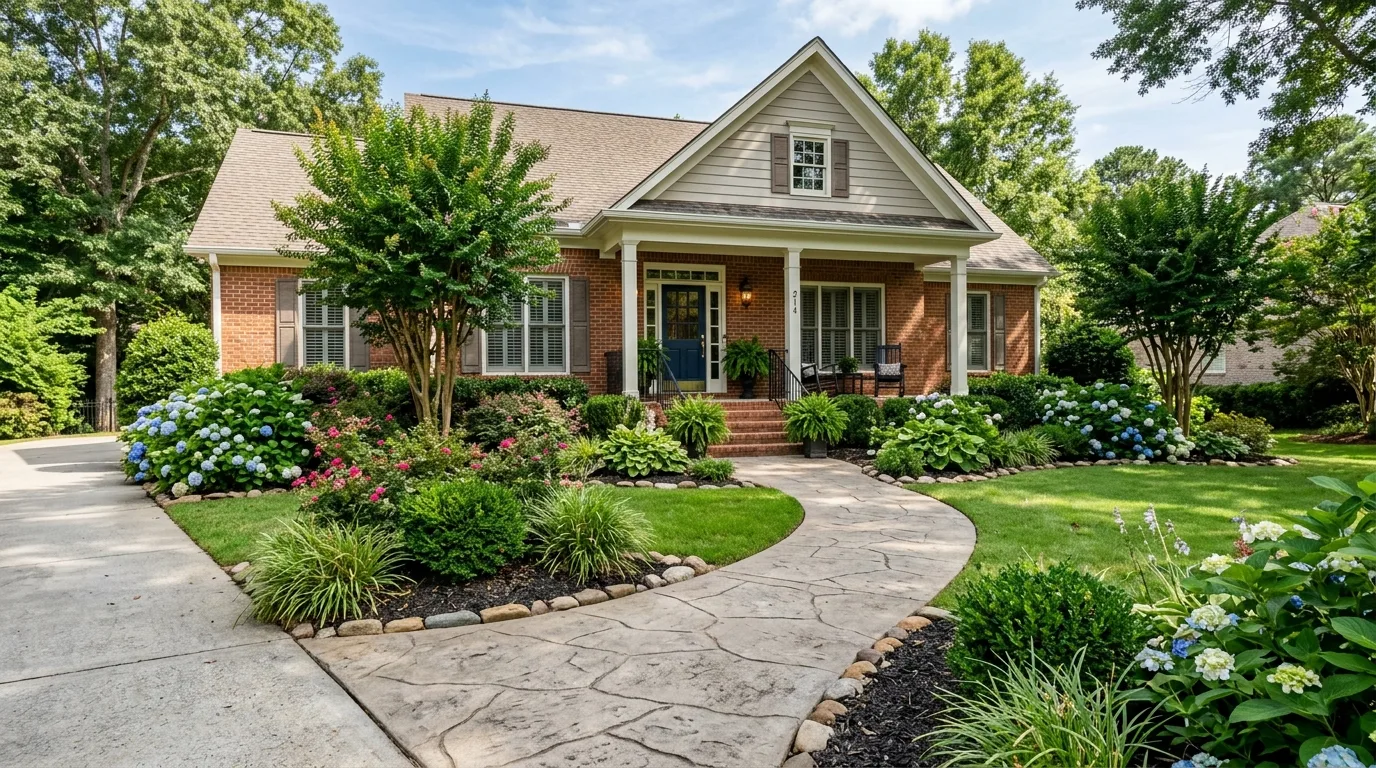
A cracked sidewalk in front of a Woodstock home is both a safety issue and a legal one. Raised sidewalk sections caused by tree root intrusion or sub-grade movement create genuine trip hazards — and in Cherokee County, the homeowner carries liability for falls that occur on sidewalk sections within their property boundary, depending on location and local ordinance. Beyond liability, deteriorating concrete sidewalks send a visible signal about a property’s condition that affects curb appeal and, in competitive resale markets, buyer perception. This post covers the repair methods, typical costs, and when sidewalk issues in Woodstock require more than a patch.
Concrete Sidewalk Repair Estimates in Woodstock
Free assessments for trip hazards and surface deterioration. Call (888) 376-0955.
Why Woodstock Sidewalks Crack and Settle
The same Cherokee County red clay that undermines driveways and garage floors creates problems beneath concrete sidewalks — and sidewalks have an additional failure mechanism driveways don’t: tree root intrusion. Woodstock’s established neighborhoods, particularly those near Downtown Woodstock and along older residential streets, have mature trees whose root systems grow laterally toward moisture sources, including the aggregate base beneath concrete sidewalks.
When a tree root grows beneath a sidewalk section, it lifts the slab from below, creating the raised edge that causes the majority of pedestrian trip hazards. The repair options are: grind the raised edge (removes the trip hazard but doesn’t fix the root cause), remove the root and reset the section (addresses the cause but the root will return), or remove and replace the section with root barriers. In Cherokee County’s clay soils, the lifted section often has also lost sub-base support on the opposite side as clay voids form, making section replacement with proper preparation the most durable solution.
Sidewalk sections without tree root issues crack from the same clay movement dynamics that affect other slabs: expansion during wet season, contraction during drought, void formation, and freeze-thaw stress in winter.
Types / Options: Sidewalk Repair Methods in Woodstock
Concrete grinding (trip hazard removal only): A diamond grinding wheel removes the high edge of a raised section to eliminate the trip hazard without replacing the slab. Cost: $50–$150 per linear foot of raised edge. This is the fastest and cheapest approach for isolated raised edges without significant cracking. The repair is functional but the height differential remains visible.
Section replacement: The damaged section is removed and replaced with new concrete on proper sub-base preparation. This is the appropriate repair for sections with root intrusion, significant cracking, or base failure. Cost: $15–$25 per square foot for residential sidewalk replacement in Woodstock, including demo, base preparation, forming, and pour. A standard 4 x 8-foot section replacement runs $480–$800.
Surface resurfacing: For sidewalk sections with surface spalling or minor surface cracking without sub-base failure, a polymer overlay resurfacing extends the service life without full replacement. Cost: $4–$7 per square foot. Effective for 5–10 years if the sub-base is stable.
Crack injection: For isolated cracks without section movement, polyurethane injection fills the crack and prevents water infiltration. Cost: $150–$300 per crack. Most appropriate for non-structural surface cracks in otherwise sound sidewalk sections.
Practical Uses: Sidewalk Repair Scenarios in Woodstock Neighborhoods
- Tree root heave in Wyngate: A 2-inch raised edge at a sidewalk joint caused by root intrusion beneath the section. Grinding removes the trip hazard today; section replacement with a root barrier prevents recurrence. Most homeowners choose grinding first and replacement when the heave returns within 2–3 years.
- Settlement cracks near Olde Rope Mill Park area: Sidewalks on lots with drainage toward the sidewalk show settlement cracks along the low edge as clay sub-grade softens seasonally. Section replacement with improved drainage grading is the long-term fix.
- Spalling on older Towne Lake sidewalks: Sidewalk sections installed in the 1990s on original construction show surface scaling and spalling from two decades of freeze-thaw cycles without sealing. Resurfacing overlay is appropriate for sections that are level and structurally sound.
- Multiple sections at once: When several consecutive sections need replacement, the per-section cost typically drops — the setup, forming, and haul-away cost is distributed across more square footage. Replacing 3–4 sections together is more economical than separate calls for each.
- Public vs private sidewalk distinction: Some sidewalks in Woodstock are municipal property (within the right-of-way); others are within the homeowner’s property boundary. The distinction matters for permit responsibility and liability. If you’re unsure which category your sidewalk falls into, the City of Woodstock public works department can clarify.
How Cherokee County’s Climate Creates Sidewalk Maintenance Needs
Woodstock’s 54-inch annual rainfall creates sustained moisture conditions that support tree root growth toward concrete sidewalks more aggressively than drier climates. Oaks, maples, and sweet gums — all common in Cherokee County’s residential neighborhoods — have root systems that can extend 2–3 times the canopy radius, meaning a tree 30 feet from the sidewalk can still produce root heave beneath it.
Georgia’s freeze-thaw cycle, while less severe than northern climates, occurs frequently enough to affect unsealed sidewalk sections over time. Winter lows below 32°F cause water trapped in surface pores of unsealed concrete to freeze, expand, and mechanically chip the surface. Sealing sidewalks every 5 years with a penetrating sealer reduces this process and extends surface life.
Woodstock Sidewalk Repair — Trip Hazard Removal and Full Section Replacement
We handle both quick fixes and full section replacement. Call (888) 376-0955.
Cost Factors: Sidewalk Repair in Woodstock
Grinding a raised edge: $50–$150. Single section replacement (4 x 8 ft): $480–$800. Surface resurfacing per square foot: $4–$7. Permit requirement: The City of Woodstock requires permits for sidewalk construction within city limits, including replacement sections. Public right-of-way work may require additional coordination with the city’s public works department.
The cost of inaction is also worth quantifying. A 2-inch raised sidewalk edge in front of a Woodstock home creates a measurable liability risk. Homeowner insurance policies typically cover trip and fall claims, but repeated claims can affect premiums or coverage. The cost of grinding a single raised edge ($50–$150) compares favorably against the deductible exposure of a single liability claim.
Frequently Asked Questions
Do I need a permit for sidewalk repair in Woodstock GA?
Within Woodstock city limits, concrete sidewalk work — particularly if it involves sidewalk sections within or adjacent to the public right-of-way — may require a permit from the City of Woodstock Community Development Department. Replacement of sidewalk sections entirely within private property generally follows standard residential permit thresholds. We confirm permit requirements for every sidewalk project during the estimate.
How much does concrete sidewalk repair cost in Woodstock GA?
Grinding a raised edge runs $50–$150. Single section replacement runs $480–$800 for a standard 4 x 8-foot section including demo and proper base preparation. Surface resurfacing runs $4–$7 per square foot. Full sidewalk replacement for a property with multiple deteriorated sections typically runs $15–$25 per square foot installed. Contact us at (888) 376-0955 for a site-specific estimate.
How long does concrete sidewalk repair last in Georgia?
Properly executed sidewalk repairs in Georgia’s climate last 10–25 years depending on the repair method and underlying cause. Grinding provides a permanent trip hazard resolution but doesn’t prevent the root from continuing to grow, so the section may need replacement within 3–5 years. Section replacement with root barrier lasts significantly longer. Surface resurfacing on a structurally sound base lasts 8–12 years with proper sealing.
Woodstock Concrete Sidewalk Repair — Free Assessment
We inspect and estimate all sidewalk damage types. Call Woodstock Concrete Pros at (888) 376-0955.
Related: